Fresno, CA · Garage Door Service
Kerman's homes mostly went up around 1993, a decade past Fresno's median build year. That gap changes which opener bracket and header clearance you need. We come from Fresno to install it right.
Kerman sits about 15 miles from our Fresno shop, so an opener install here gets scheduled as a dedicated trip, not a drop-in between closer jobs. That's worth knowing up front: we're not based in town, we travel to it. When you call, tell us the age of your house if you know it, because Kerman's housing stock centers on 1993, a good decade newer than the median build year across the wider Fresno service area. That single detail tells us a lot before we even load the truck - whether we're likely dealing with a factory header bracket that's still true, or one that's sagged and been shimmed by a previous owner. We ask because guessing wrong means a second trip, and a second trip out here costs you time we'd rather spend getting the job done once. Bring us the opener's brand and horsepower if it's printed on the old unit, or a photo of the header area above the door. That's usually enough to quote the job accurately over the phone before we make the drive.
We don't post a flat number for opener installs because the range depends on horsepower, drive type, and what the header framing needs before the new unit goes up. What we can tell you is what shapes the estimate in Kerman specifically: median household income here runs $57,556, noticeably below the $62,896 median across the broader service area, and that's part of why we walk through belt-drive versus chain-drive options rather than defaulting to the priciest unit on the truck. Households here number around 4,796, mostly single-family owner-occupied houses built in the same general era, which means the framing and header height tend to be consistent from block to block - that consistency usually keeps labor time, and therefore cost, predictable once we're on site. What we won't do is quote you a number sight unseen if your header has been modified or if there's rot in the wood the bracket mounts to. We price that piece after we've had eyes on it.
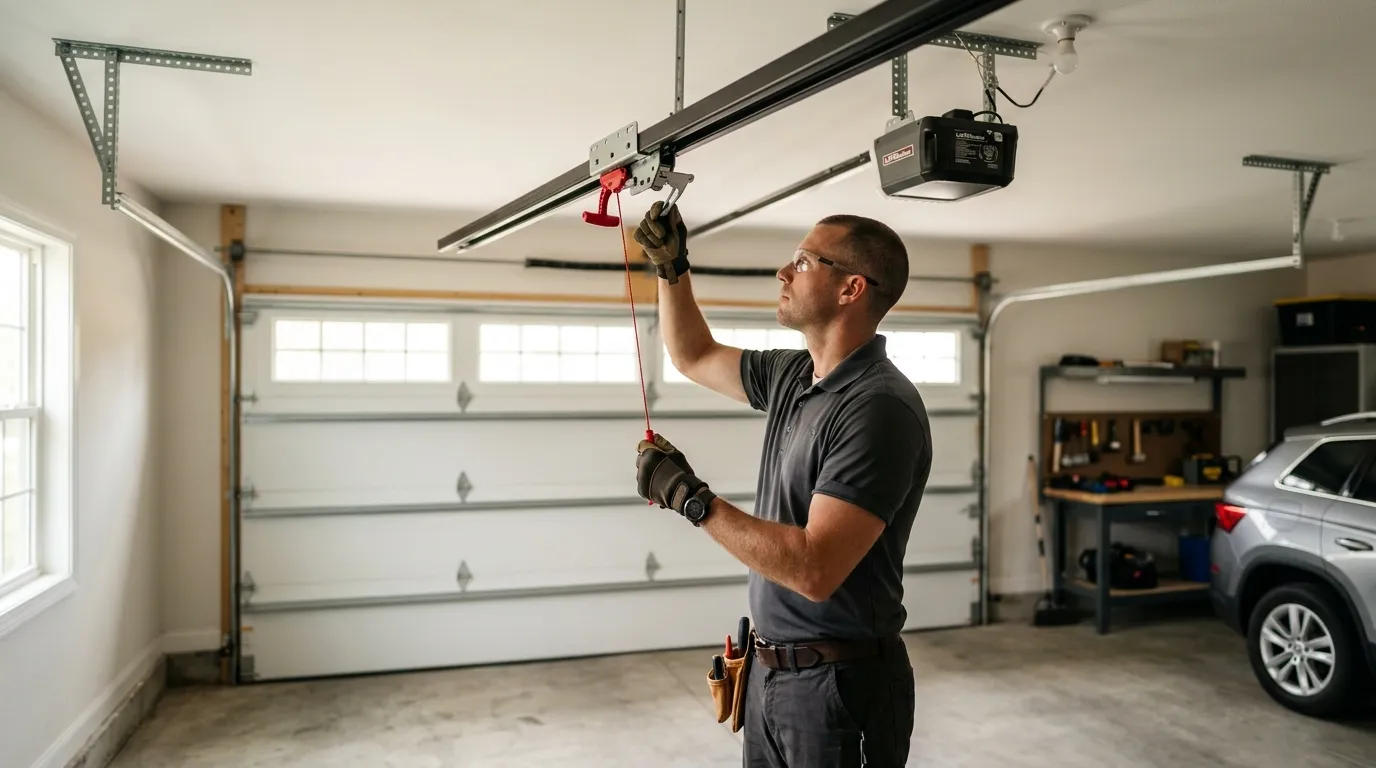
A house built around 1993, which describes most of Kerman's stock, usually has a header already sized for a standard 1/3 or 1/2 HP opener bracket, so the mounting side of the job is usually straightforward. What takes the time is the run: setting the rail, squaring it to the door, and getting the travel limits dialed in so the door doesn't slam the floor or stall short of full close. We test the safety reversal and the photo-eye sensors before we call it done - not optional steps, they're what keeps a garage door from closing on a car bumper or a kid's bike. If your opener is being swapped because the old motor burned out rather than the whole system failing, we check the springs and cables at the same time. An opener install on a door with a tired spring is a short-term fix; the spring will still fail, just later and less conveniently.
We carry the common belt-drive and chain-drive openers on the truck along with standard rail kits, so most Kerman installs don't wait on a parts order. What we don't stock is every specialty bracket for oddball header heights or older jackshaft setups - those get ordered in, and that's the honest limitation here: if your framing needs a nonstandard mount, expect a short delay while the part comes in rather than a same-visit install. Given that most homes in this area date to around the early-to-mid 1990s, the header framing is usually standard depth, which is exactly why we can carry the common brackets and skip that wait on most jobs out here.
Fresno's broader service area runs a severe heat climate band, and Kerman sits in the same band, which matters more for openers than people expect. Heat swells wood door panels and can throw off the balance point the opener's force settings were tuned to. If we install a new opener without checking spring balance first, the unit will fight the door on every hot afternoon and burn out its gears early - that's a callback we'd rather avoid by doing the balance check up front. The other complication specific to older single-family stock like Kerman's is aluminum wiring or undersized circuits feeding the garage; a modern opener with a battery backup or smart-hub connection sometimes needs an outlet added or upgraded before install, which is a cost worth flagging early rather than discovering on install day.
For a straight opener swap where the header and springs check out fine, you're looking at a door that's operable again the same visit - we don't leave a job half-done overnight. Where it stretches longer is if we find the header needs reinforcing or a circuit needs an electrician before we can safely mount a unit with battery backup. In those cases we'll walk you through what's next rather than force an install that won't hold up. Given the 15-mile trip from Fresno, we plan for a full visit rather than a quick in-and-out, so scheduling tends to be a single appointment start to finish.
Most likely yes. Kerman's housing stock centers on 1993, and header framing from that era is usually standard depth, which fits common opener brackets without extra work. We confirm on site before quoting a final price, since a modified or damaged header changes the job.
No. We run out of Fresno, about 15 miles away, and schedule Kerman installs as a dedicated trip rather than a drop-in. We carry standard belt-drive and chain-drive openers and rail kits on the truck, so most jobs don't need a return visit for parts.
Yes. The area sits in a severe heat climate band, and heat swells door panels and shifts spring balance. We check balance before setting the opener's force limits so the motor isn't fighting the door on hot days, which is a common cause of early gear wear.
Call now or request a free quote - same-day service on most repairs, upfront written pricing.